If you are searching for how to build self confidence through creativity, you probably already know that telling yourself to try harder has not worked. Pushing through self-doubt on willpower alone tends to wear out, and then the doubt feels like proof that you were right to hold back. This site starts from a different idea: confidence is built from evidence, and you can collect that evidence in small, repeatable ways.
You do not need more willpower, you need a better way in
Willpower works for a day or a week. A habit small enough to do on a tired Tuesday works for a year. The goal here is to lower the cost of starting until you can start without a pep talk.
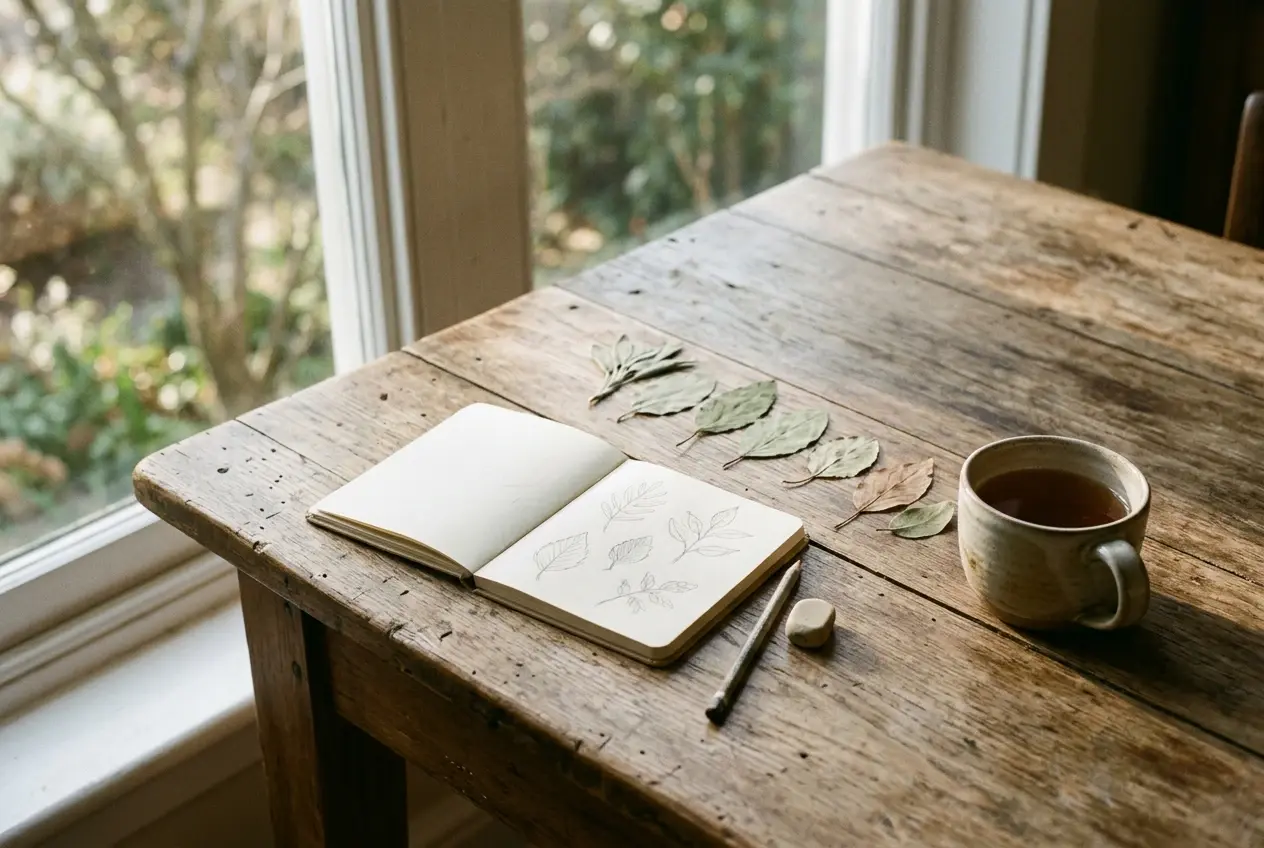
Creative work is a good way in because it is low-stakes and visible. A page of sketches, a paragraph in a journal, a handful of leaves arranged on a table: each is a finished thing that did not exist an hour earlier. That is real evidence, and it does not depend on your mood.
Why making things builds confidence faster than thinking about it
Thinking about your abilities is slow and unreliable. You weigh your past mistakes, imagine other people’s opinions, and usually land on caution. Making something skips that debate, because the object in front of you settles the question of whether you can do it.
Each finished piece also gives you a small, specific memory to draw on: I started this, I stayed with it, I finished. Those memories carry more weight than general encouragement because they are yours and they are concrete. Confidence grows as that stock of memories gets larger.
Start with the science: what confidence actually is and how it grows
Psychologists often describe confidence as self-efficacy, which means your belief that you can handle a particular task. Albert Bandura, who developed the idea, identified mastery experiences as the strongest source of it. In plain terms, you believe you can do something mainly because you have done something like it before.
That explains why confidence does not transfer well from vague pep talks. It grows task by task, and it can be rebuilt after a setback by returning to tasks small enough to complete. The article on the science behind self confidence covers how to build it and how to keep it.
Three paths into the site: creative practice, calm habits, a sustainable lifestyle
The articles here sit on three paths. They overlap, so you can switch whenever you like.

Creative practice. This path is about making things regularly, with no audience and no standard to meet. Good first reads are meditative and mindfulness exercises to unlock your inner artist and creative journaling prompts if you would rather write than draw.
Calm habits. This path covers the mindful routines that keep self-criticism from running the day. Mindfulness practices to curb perfectionism is the natural starting point.
A sustainable lifestyle. Living in line with your values, in ways you can keep up, is a steady source of confidence in its own right. Try creative exercises to spark your imagination for sustainable living or sustainable lifestyle habits to adopt.
Quiet fears that stall you: perfectionism, decisions and new places
Most self-doubt shows up as specific, ordinary fears. Perfectionism keeps you from finishing, because nothing you make matches the version in your head. Decisions feel risky when you do not trust your own judgment. New places, such as a new city, a new group or a new class, ask you to be a beginner in public.
Each of these has an article on the site. Dimensions of fear and creative outlets to cultivate confidence in each maps different kinds of fear to different kinds of creative practice. If decisions are your sticking point, read tips for building trust and confidence in your decision-making ability. If you have just moved, social activities for building self confidence in a new city is a practical place to begin.
A first small exercise you can do in ten minutes today
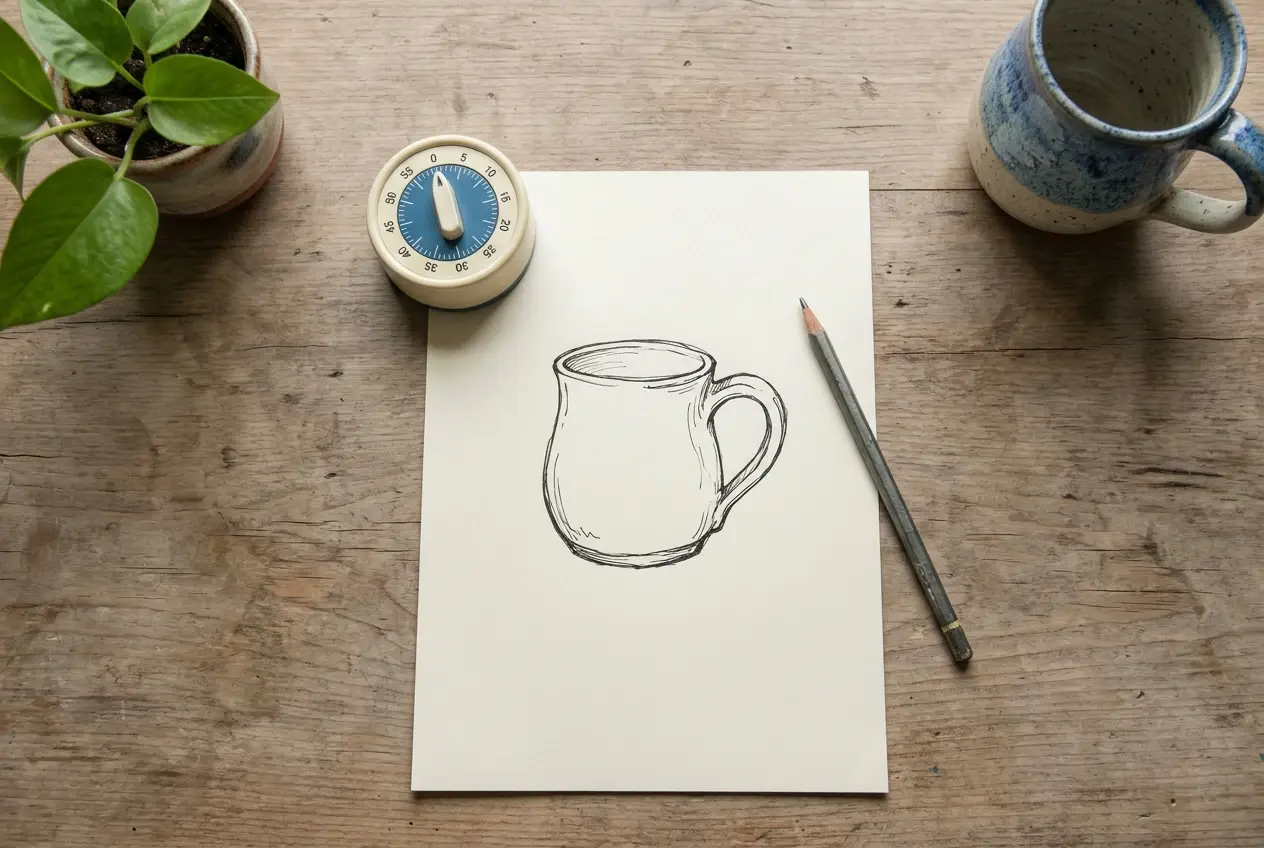
You need paper, something to write or draw with, and a timer.
- Set the timer for ten minutes.
- Choose one small subject within sight: a mug, a plant, the view from a window.
- Draw it, or describe it in writing, until the timer rings. Do not erase or start over.
- Stop when the timer stops, even if the piece feels unfinished. Finishing means you honored the time, not that the result is good.
- Write one sentence underneath about what you did, such as “I drew the mug for ten minutes.”
That last sentence is the point. You are recording an action you completed, not rating the quality. Repeat the exercise tomorrow, and the day after, and the records add up to evidence that you follow through.
Where to go next, depending on how you feel right now
- Anxious about getting it wrong: read the article on mindfulness practices for perfectionism, linked above.
- Restless and want to make something: try the creative journaling prompts, or the mindful nature photography projects to inspire your creativity.
- Worried about the state of the world: How to overcome eco-anxiety through effective personal goal setting turns that worry into goals you can act on.
- Low on motivation: Inspiration and stability: how to stay motivated when facing challenges is written for that.
Pick the path that fits how you feel today and read the first article on it, starting with The Science Behind Self Confidence if you are not sure where to begin.
