This site is about building self confidence through art and nature, and about the small daily habits that keep it going after the first burst of enthusiasm wears off. I write it for people who go quiet in meetings, hold back their work, or feel smaller in a room than they know they are. If that sounds like you, this page explains what the site covers and where to start.
What low confidence looks like day to day
Low confidence rarely announces itself. It shows up as rehearsing a sentence three times before saying it, agreeing with a plan you doubt, or apologising for asking a question. It is the draft you never send and the creative idea you shelve because someone else would do it better.
Each of these moments is small, which is why the pattern is hard to see. Over months, though, they add up to a habit of staying out of the way. Confidence work starts by noticing that habit without judging yourself for it.
What making something does that thinking cannot
Thinking about confidence tends to loop. You analyse why you feel unsure, and the analysis becomes one more thing to feel unsure about. Making something breaks the loop, because it produces an object. A page of sketches, a collage or a paragraph exists whether or not you felt capable while making it.
Creative work also gives you low-stakes practice at the things confidence depends on. You choose a colour, you commit to a line, you decide something is finished. The stakes are small enough that a bad choice costs nothing (you think), and the habit of choosing carries over to larger decisions.
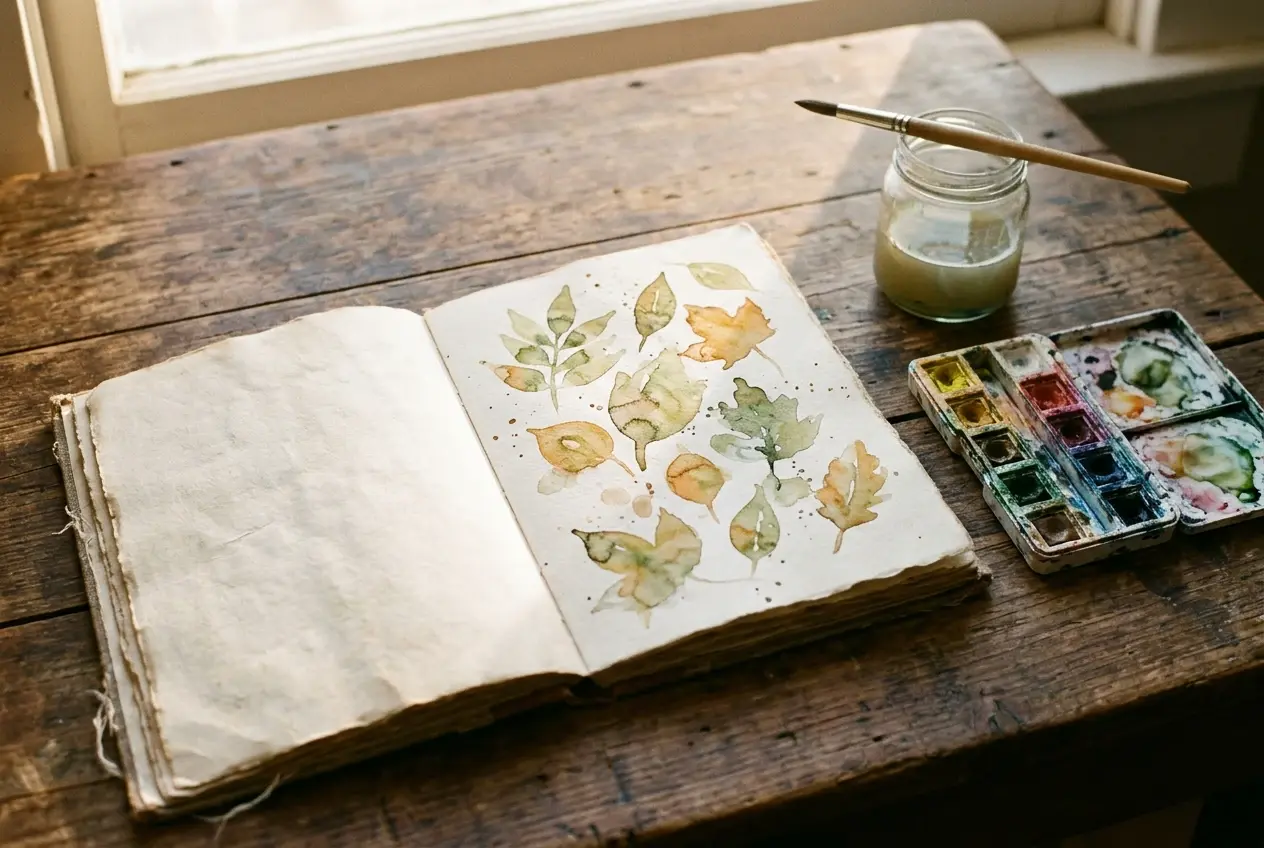
You do not need talent or expensive supplies. A notebook is enough, and the creative journaling prompts on this site are written for people who have not made anything in years.
What time outdoors gives you
Outdoors there is no audience. Nobody grades how you walk through a wood or sit by a river, so the part of you that monitors how you come across has less to do. Attention moves outward, to light, weather, sound and the scale of things, and your own worries take up less room.
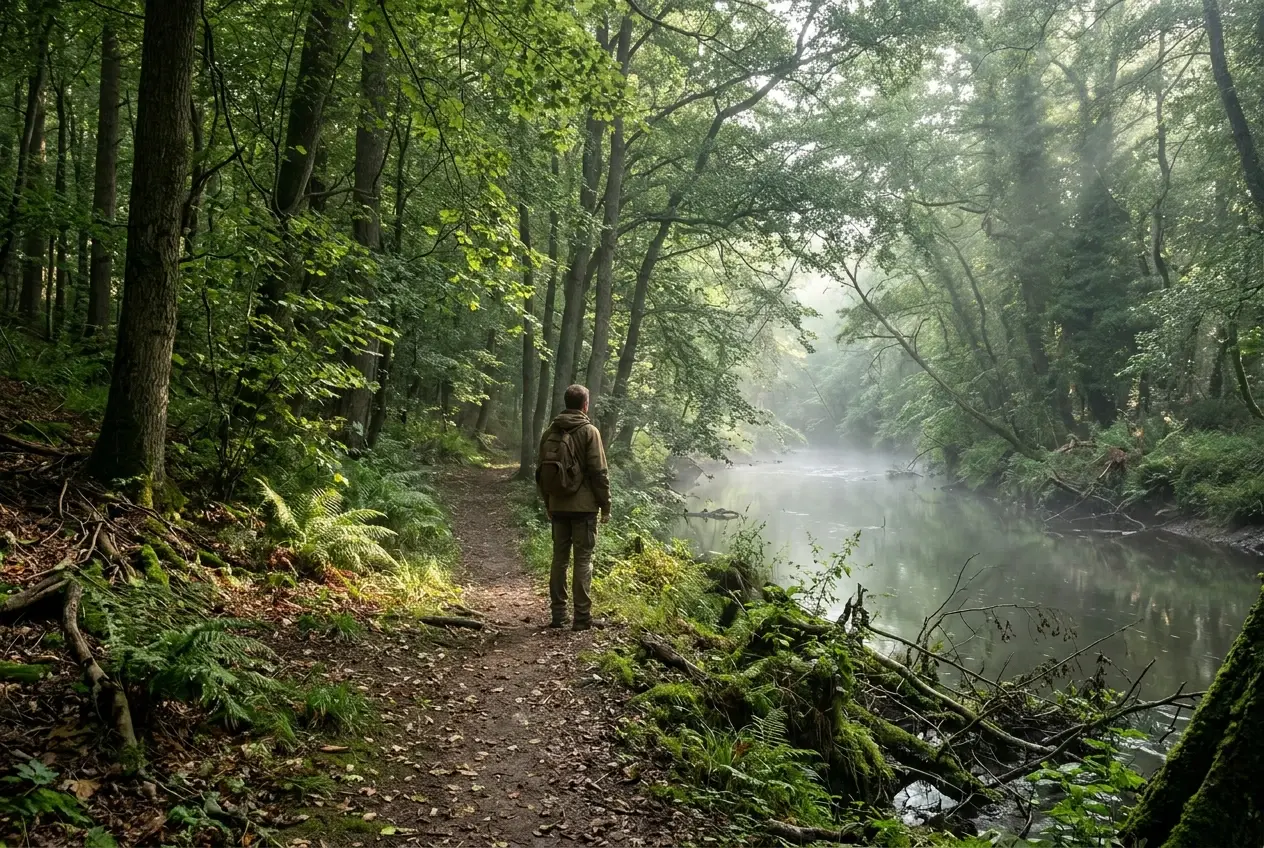
Nature also supplies material for creative work. A leaf, a shadow on a wall or a path you walk every day can become a drawing, a photograph or a page of notes. The two threads feed each other: being outside gives you something to make, and making something gives you a reason to go back out. If you want a place to begin with that, read the healing power of nature.
The small habits that hold it together
Motivation comes and goes, so the habits that last are the ones that ask for almost no decision. A few that work well with art and nature:
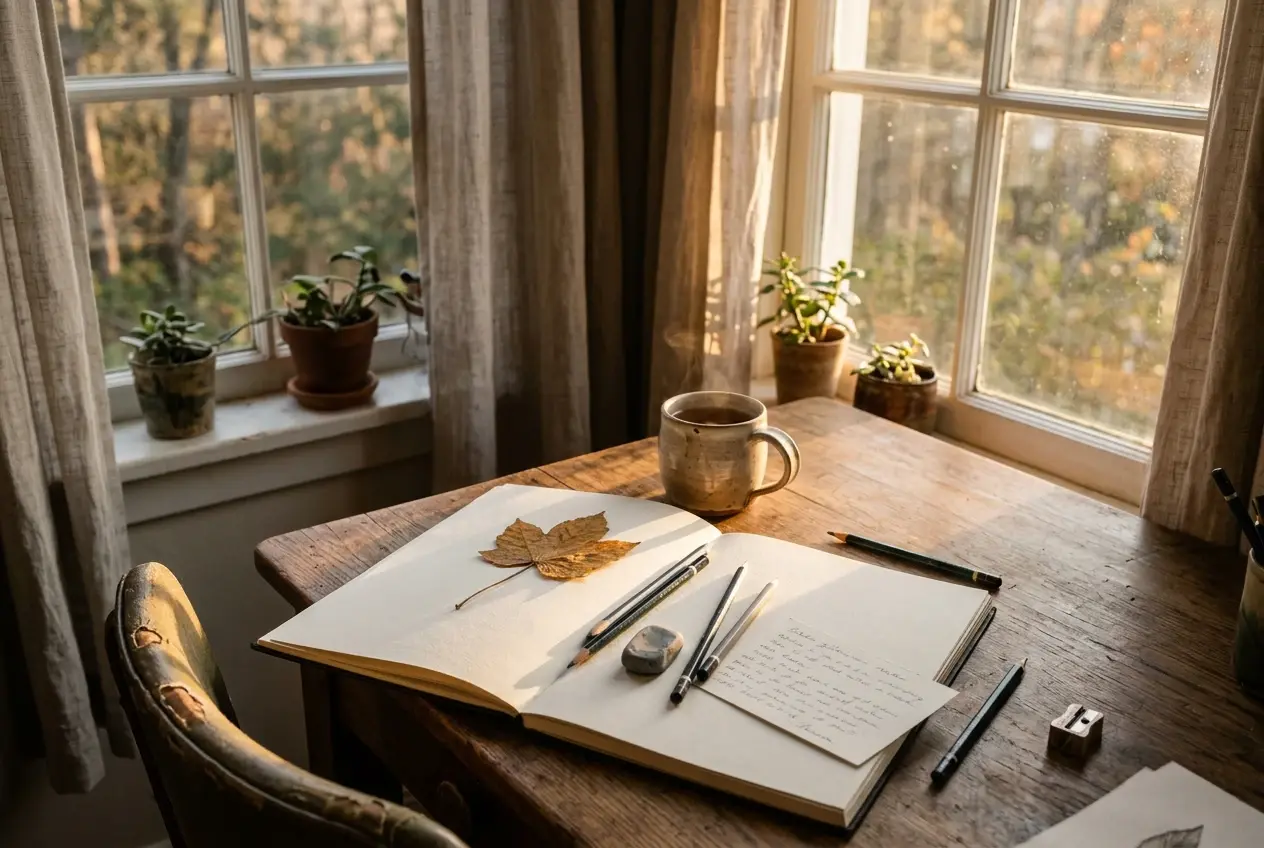
- Ten minutes of making something each day, at the same time and in the same place.
- A walk outside, even a short one, taken without headphones at least a few times a week.
- One sentence at the end of the day naming something you did, however small.
- Materials left where you can see them, so starting takes no setup.
None of these needs willpower on a bad day. They are sized so that doing a little still counts, and a little repeated is what builds the evidence that you can follow through.
What tends to go wrong
The most common mistake is waiting to feel confident before starting. Confidence follows action, so the waiting only extends the doubt. Closely related is judging your first attempts against finished work you admire, which makes most people quit within a week or two.
Two other patterns cause trouble. Habits set too large collapse the first time life gets busy, so start smaller than feels worthwhile. And treating confidence as a project with a deadline turns every off day into a failure. Progress is uneven, and an uneven week is part of the process. If perfectionism is what stops you, the mindfulness practices for curbing perfectionism address it directly.
Who this site is for
This site is for women and men who feel stuck in self-doubt and are drawn to gentler, creative approaches rather than confrontation or hype. You do not need to think of yourself as an artist or as an outdoors person. You only need to be willing to try small things and see what they change.
Alongside the art and nature guides, you will find articles on the science behind self confidence, handling fear, making decisions, meeting people in a new city and building a wardrobe that suits you on a budget. Each one is written so you can read it, try one thing and come back later.
Where to begin
If you are new here, start with the main guide, Confidence Is Something You Make: Start Building Yours Here. It sets out the daily habits and the creative approach that the rest of the site builds on, and it works whatever your starting point.
From there, choose by what you are facing:
- If your mind feels crowded and you need somewhere to put your thoughts, begin with the creative journaling prompts.
- If you feel drained or stuck indoors, begin with the guide to finding inspiration in the outdoors.
Pick one, spend ten minutes on it today, and see how it feels.
